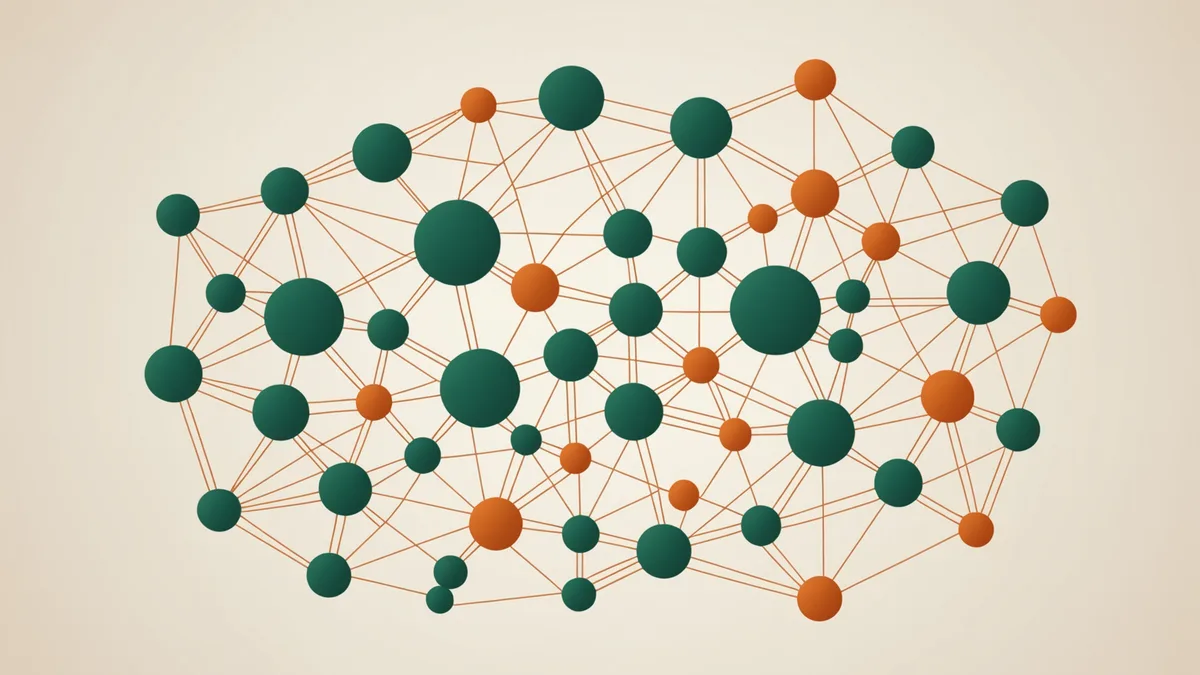
You already have more connections to investors than you think. The problem isn't your network size — it's that you haven't mapped it. Most first-time founders assume they don't have investor connections because they haven't raised before and don't personally know VCs. What they miss is that second-degree relationships — the people their direct contacts know — create paths to almost every fund on a realistic target list. This guide walks you through the systematic process of surfacing those paths before you reach out to anyone.
Step 1: Build a focused target list first
Before you can map paths to investors, you need a list worth mapping against. Start with 20–30 funds that are a realistic fit for your stage and sector: right check size (for pre-seed and seed, look at funds writing $100K–$2M initial checks), track record in your space, and no direct portfolio conflicts. Use Crunchbase, PitchBook if you have access, and each fund's published portfolio page to filter quickly.
Precision beats volume here. Trying to map relationships to 150 funds is a project that never gets finished. Twenty-five well-chosen funds — ones where a deal is genuinely plausible — is a tractable mapping exercise. Once you've identified your 25, the network work begins.
"The average first-time founder has 200 direct contacts. Those 200 people collectively know tens of thousands — including someone at every fund on a 25-fund target list."
Step 2: Systematically catalog your direct network
Export your LinkedIn connections: go to Settings > Data Privacy > Get a copy of your data, and download the Connections file. You'll get a CSV with every direct connection and their current employer. Sort by company. Look for anyone currently or previously employed at a VC firm, at a portfolio company of a fund on your target list, or at a company that has been backed by funds in your target set.
Do the same with your email contacts. Go back three to five years. People you've worked with at previous employers, former classmates now at relevant companies, contacts from industry events. Don't screen yourself out — you don't know yet who knows whom. Cast the net and then score what you catch.
Step 3: Map your advisors' networks explicitly
Advisors are often the highest-value second-degree source and the most underused. Most founders never ask their advisors the mapping question directly and systematically. Schedule a 30-minute call with each advisor specifically for network mapping — not a general check-in, a specific session where you go through each fund on your list and ask: "Do you know anyone here?" Not "do you have any investor connections?" — that's too vague. Fund by fund, person by person.
The results are consistently surprising. An advisor who's been in the industry for ten years has crossed paths with dozens of fund partners, associates, and scouts. They often don't think to volunteer these connections because the founder never asked specifically enough. The explicit mapping session changes that.
Step 4: Score connection strength — not just existence
Once you've cataloged your paths, score them by relationship quality, not just existence. A three-tier scoring model is sufficient: Strong (the introducer has a genuine close relationship with the target investor — close personal connection, they've worked together, they co-invest regularly), Medium (professional acquaintance who has had meaningful interaction — they've met at events, shared a panel, have a warm but not close relationship), and Weak (they've met once or are loosely connected on LinkedIn with no real relationship foundation).
Prioritize your strong and medium paths. A single strong warm intro converts at 35–40% to a first meeting. A weak-path intro converts at rates barely above cold outreach, because the investor discounts the signal from someone they barely know. Don't mistake the presence of a path for quality of a path.
Step 5: Make the introduction ask frictionless
When you identify a strong path, make the ask so easy that the introducer can complete it in 90 seconds. Send them a forwardable blurb: a two-sentence description of what you're building, one sentence on traction or insight, and one sentence on who you're hoping to meet and why. Include your contact info. Tell them they can send it verbatim.
The biggest friction in the introduction workflow isn't willingness — it's effort. Most people who would be happy to make an intro don't make it because writing a compelling email about someone else's startup feels like work. When you write it for them, the friction disappears. The intro rate goes from "I'll try to connect you sometime" to "sent" in the same conversation.
The ongoing map, not the one-time exercise
Network mapping isn't a one-time pre-raise project. As your company grows and you add team members, advisors, investors, and customers, your second-degree investor network expands. A new engineer who came from a well-connected startup brings a new layer of paths. A new advisor who's been active in your sector opens another set. Keeping your network map current means you're never starting from zero when you need to add investors to your pipeline.
What the mapping exercise reveals beyond investor paths
A secondary benefit of systematic network mapping is that it often surfaces non-investor relationships that matter: potential design partners at companies in your target customer segment, potential hires who are connected through two degrees, and advisors you hadn't thought to recruit who have the specific expertise you need next. The mapping exercise is really a structured exploration of what your extended network contains — and investor paths are the most immediately actionable output, but rarely the only one of value.
Founders who do this exercise rigorously often describe it as one of the highest-ROI activities they did in the year before their raise. Not because it produced a magic investor introduction (though it often did), but because it replaced guesswork about who they knew with an actual inventory. That inventory becomes a navigable asset — a documented map of paths — rather than a vague sense of "I might know someone who knows someone." The specificity is the whole point: vague awareness of network potential doesn't translate to warm introductions. A documented map does.